Schools Tighten Security, but Measures Vary Widely Across the U.S.
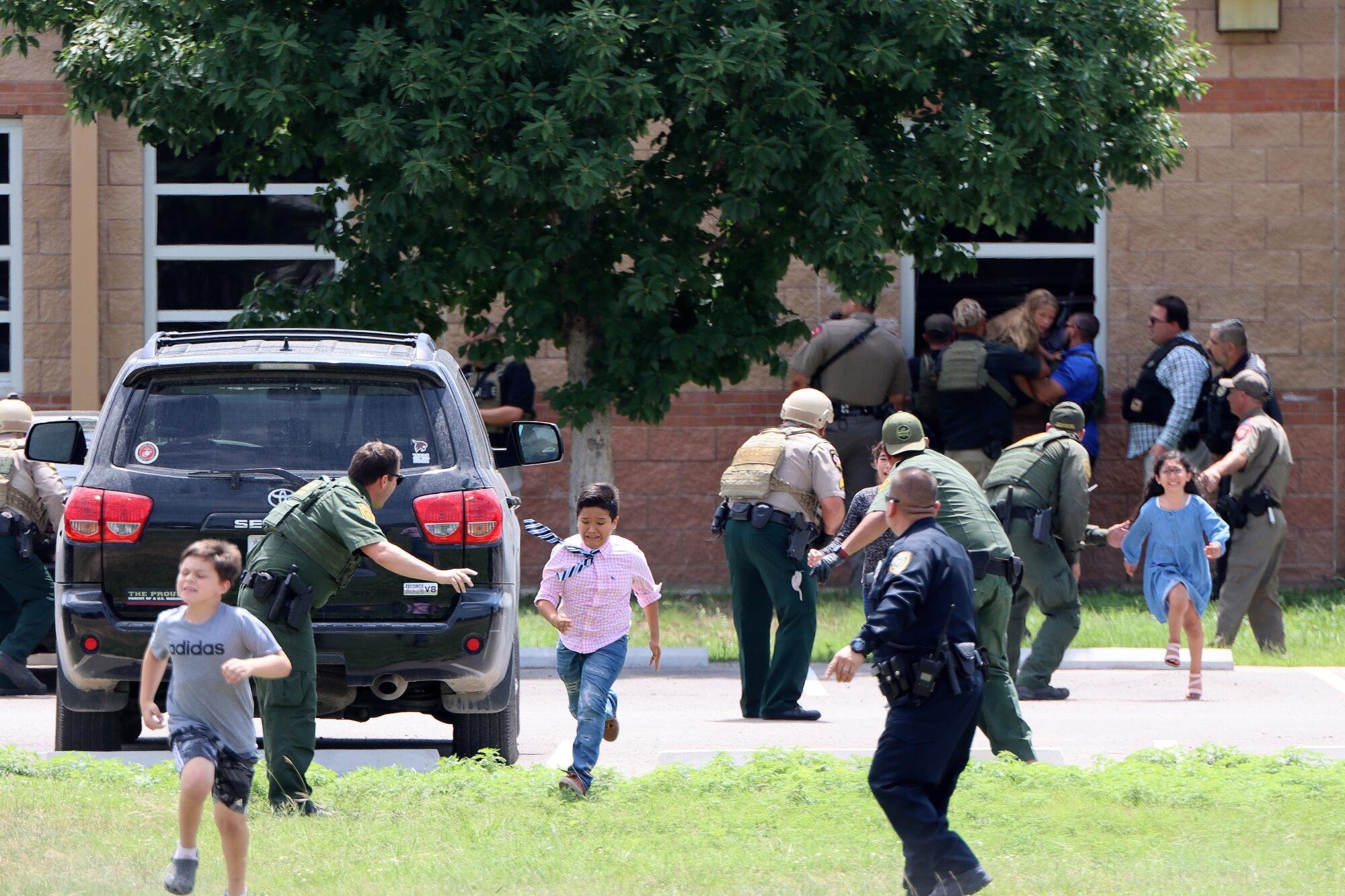
Students fleeing Uvalde, Texas School Shooting
In the wake of recent school shootings, such as the tragedy in Uvalde, Texas, U.S. public K-12 schools have increasingly focused on tightening security. According to data from the National Center for Education Statistics (NCES), most schools have implemented measures like securing entry points with locked or monitored doors (97%), requiring visitor check-ins with badges (98%), and conducting lockdown drills (98%). However, the adoption of these security protocols varies significantly based on school type, location, enrollment size, and student demographics.
For example, while nearly all schools control access during school hours, only 73% have classroom doors that can be locked from the inside, with fewer such locks in schools where most students come from lower-income households. Charter schools are generally better equipped, with 83% having interior locks compared to 72% of traditional public schools. Active shooter preparedness has also grown, with 96% of schools having written plans, an increase from 79% in 2003-04.
Additionally, the use of technology to enhance safety, such as security cameras (91%), two-way radios (83%), and electronic notification systems (70%), has become more widespread. However, differences remain; for instance, high schools and middle schools are more likely than elementary schools to use anonymous threat-reporting systems and security cameras. Panic buttons linked directly to law enforcement are found in only 40% of schools, with disparities based on region and school demographics.
Security staffing is another area of disparity. About 65% of schools reported having security personnel on-site at least weekly, but this presence is more common in larger schools and those with higher enrollment. In contrast, schools with more racial or ethnic minority students are less likely to have armed security officers. Threat assessment teams, a critical component in identifying potential risks, are more prevalent in urban and suburban schools compared to rural ones.
The data underscores the uneven implementation of security measures across the country, highlighting the need for a more standardized approach to school safety that considers varying resources, demographics, and regional differences.
BY KATHERINE SCHAEFFER
Read the full article here:
Discover how schools across the U.S. are navigating the complexities of safety and security by reading the full article. Follow the link to learn more about the diverse approaches and challenges facing today's educational institutions.
https://acrobat.adobe.com/id/urn:aaid:sc:va6c2:fd0775ec-d734-481c-9b36-adfc215741eb